Organizing a party for a hundred guests means accepting a precise logistical challenge: ensuring nothing is missing without filling three crates with unnecessary bottles. The calculation of the amount of drinks relies on a few concrete variables, not on a magic formula. Duration of the evening, profile of the guests, type of meal served: each parameter shifts the balance.
Temperature and venue: the factor that calculators ignore
Most online guides suggest an average per person per hour. This average works in an air-conditioned room in October. It becomes inaccurate as soon as you step outside this framework.
See also : How to Choose the Ideal Location to Establish Your Business and Ensure Its Success
An outdoor event without shade in summer can increase the consumption of cold drinks by about a third compared to an indoor reception. Before counting the bottles of wine, ask yourself: where and when is the party taking place?
- In an air-conditioned indoor setting, consumption remains close to standard averages. Guests alternate between alcohol and water at a regular pace.
- In a shaded outdoor area (tent, covered terrace), plan for a surplus of non-alcoholic drinks, especially water and fruit juices, as the heat increases thirst even before the first glass of wine.
- In full sunlight, the demand for water and cold drinks skyrockets. Double the amount of water planned compared to an indoor party, and slightly reduce the share of alcohol: guests naturally turn to soft drinks.
To accurately estimate the amount of drinks for 100 people, incorporate this parameter before any other calculations. It determines the distribution between alcoholic and non-alcoholic beverages.
Recommended read : How to Make the Most of 30,000 Euros: Strategies and Opportunities
Distribution of wine, beer, champagne, and soft drinks for 100 guests
You know the venue and the season. Let’s move on to the breakdown by type of drink. Here’s the logic, not a fixed recipe.
Wine and champagne
Wine remains the most consumed drink at festive evenings in France. Count about half a bottle of wine per person for the meal, which amounts to around fifty bottles for a hundred guests. This base covers a normal duration dinner, with starter, main course, and dessert.
For champagne or crémant served at the toast or for the reception, the common rule is to plan for two to three glasses per guest. A bottle of champagne yields six glasses. Plan for between 35 and 50 bottles of champagne depending on the duration of the cocktail.
Beer and other spirits
Beer attracts an increasing share of guests, especially at casual parties. If you offer beer in addition to wine, reduce the volume of wine accordingly. Planning about ten liters of beer for a hundred people covers a secondary offering. If beer is the focus of the bar, increase to twenty-five or thirty liters.
Cocktails and spirits complicate the calculation because the servings vary. A bottle of spirits yields about fifteen glasses. For a cocktail bar, anticipate the popularity of two or three recipes rather than offering ten.
Water and non-alcoholic drinks
Water is the most often underestimated item. Count at least one liter of water per person for the evening, more in summer or outdoors. For a hundred guests, that represents at least one hundred liters, or about sixty bottles of one and a half liters.
Fruit juices and sodas complement the offering for those who do not drink alcohol, designated drivers, and children. About a quarter of the guests will prefer soft drinks throughout the evening.
Duration of the party and consumption rate by time slot
A three-hour evening is not managed the same way as an eight-hour wedding. Why does this detail change everything? Because consumption is not linear.
The first two hours concentrate the peak of consumption. Guests arrive, toast, socialize. Half of the champagne and a third of the wine are consumed in this time frame. After the meal, the pace slows significantly.
For a short party (three to four hours), apply the volumes indicated above without increase. For a long event (six hours or more), add a margin of twenty percent on wine and soft drinks, but not on champagne: the toast does not last all night.
Common mistakes that lead to waste or shortage
Calculating accurately also means avoiding recurring pitfalls. Three mistakes consistently arise.
The first: ignoring the actual profile of your guests. A group of thirty-somethings does not drink the same way as a multi-generational family meal. If your guest list includes many young adults, beer and cocktails will take precedence over wine. Adjust the distribution rather than following a standard grid.
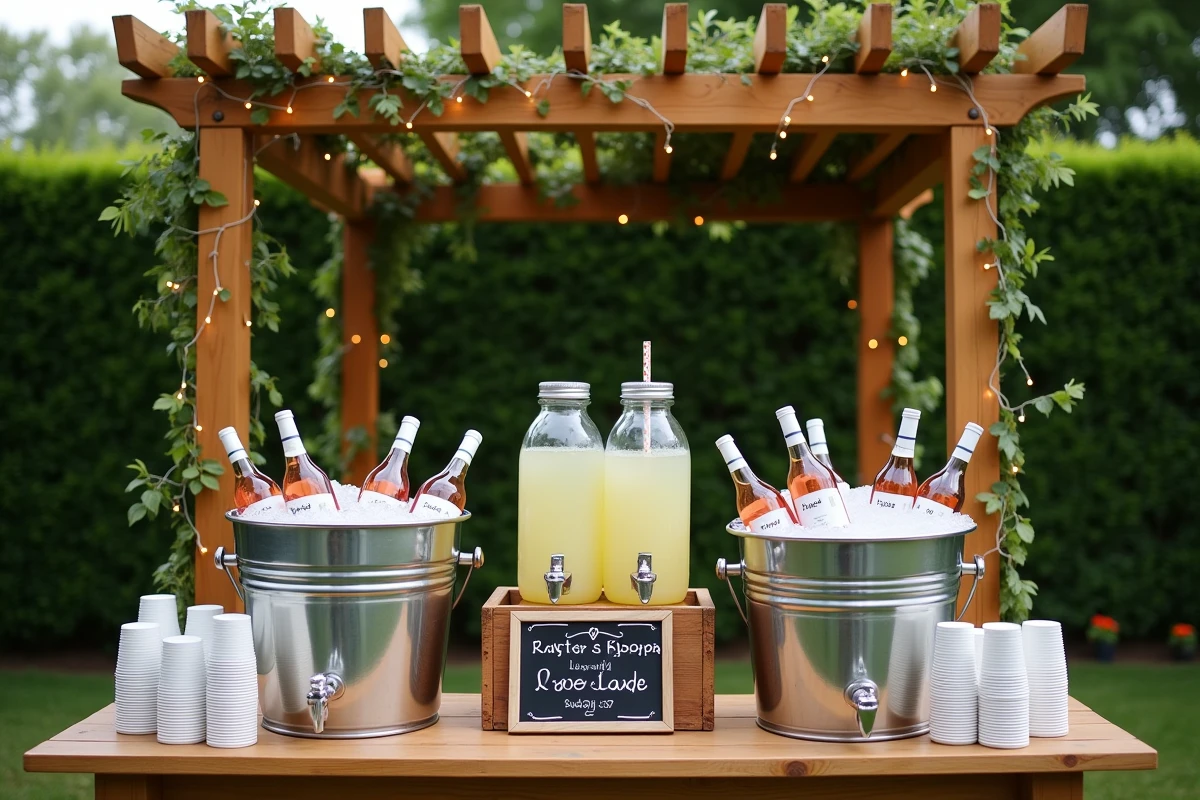
The second: forgetting ice and cooling. Warm bottles in the middle of summer mean wine that stays in the bottles. Plan the cooling logistics just as you would the volumes. Sufficient ice bins or refrigerators are essential.
The third: buying only from supermarkets without checking return conditions. Some wine merchants and wholesalers accept unopened bottles back. This option allows you to order a slight surplus without financial risk, which is better than ending the evening dry.
The actual waste at a party hovers around a quarter to a third of the drinks purchased, according to frequent feedback from caterers. Ordering with a reasonable margin and negotiating the return of unsold items remains the best strategy to balance budget and peace of mind.
Estimating drinks for a hundred people takes about ten minutes of calculation, not an hour of spreadsheet work. Venue, season, duration, guest profile: these four criteria are enough to establish a reliable framework. The rest is fine-tuning, and your guests will never notice the difference between a perfect calculation and a well-done calculation.