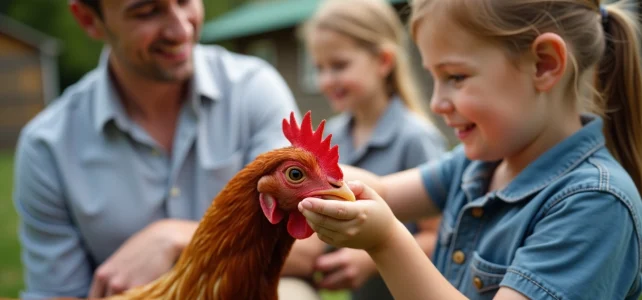
Educational mini-farms are emerging as oases of discovery and growth for children. In direct interaction with animals and plants, these young minds develop a deep understanding of nature and the environment. Learning becomes tangible and vibrant, far from traditional classrooms.
By feeding the animals, planting vegetables, or observing the life cycle of plants, children acquire practical skills and ecological awareness. These enriching experiences also foster the development of their self-confidence, empathy, and sense of responsibility.
Related reading : How to Estimate the Ideal Amount of Drinks for a Party of 100 People?
The educational and playful benefits of educational mini-farms
Educational farms, particularly in Seine-et-Marne, offer children a unique immersion in a natural environment. These facilities provide diverse activities aimed at raising awareness among young people about the importance of nature and agriculture. The Saint-Hilliers Educational Farm, for example, offers workshops on ancestral cultivation methods, allowing children to understand agricultural practices of the past.
The Gally Educational Farm, located near Paris, offers guided tours and interactive activities. Here, young visitors can participate in demonstrations of sowing, harvesting, and composting. These activities enable children to develop practical skills and understand the cycle of nature. The Brosse Educational Farm goes further by offering demonstrations and practical workshops, thus providing an enriching educational experience.
Read also : Essential Tools for Effective Inter-Ministerial Communication: The Case of Melanie2web
Immersive and interactive experiences
Some farms, such as the Vallée Educational Farm and the Petits Loups Educational Farm, offer immersive experiences where children can interact directly with animals. The Thoiry Animal and Educational Park, for its part, allows children to understand the interactions between animals and their habitat, thereby enhancing their understanding of the ecosystem.
- The Tiligolo Farm, with its children’s show featuring Madame Chaussette, offers a playful approach to learning.
- Les Z’herbes Folles, an urban farm in Pontoise managed by Sophie Lamidey, raises awareness among children about environmentally friendly agricultural practices.
- The Mini Farm Rifoinfoin, run by Catherine Petit, is another example of an enriching educational farm.
By visiting these farms, children can feed the animals, participate in gardening activities, and discover where their food comes from. These experiences contribute to their environmental education and provide them with tools to become responsible citizens. Educational farms play a role in environmental education, raising awareness among the whole family about sustainable agricultural practices. 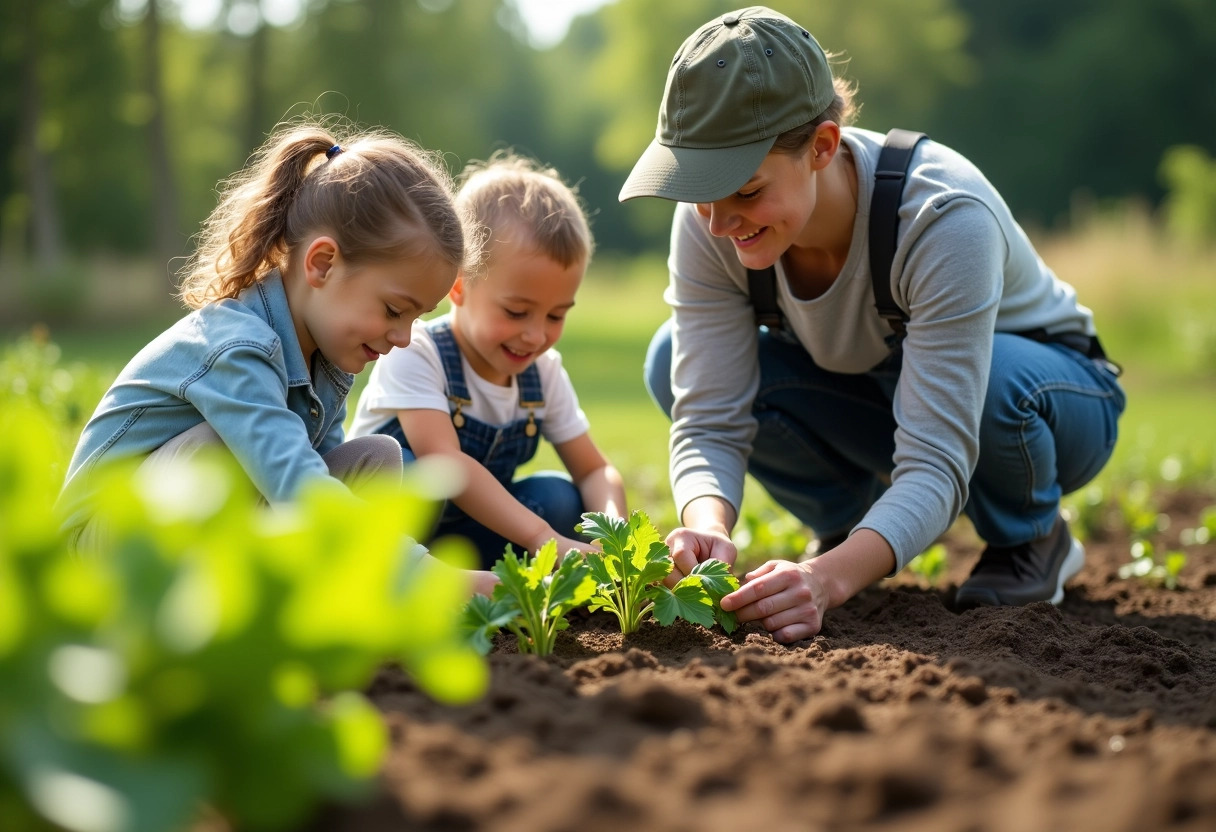
Impact on children’s personal and social development
Educational mini-farms offer children much more than just a discovery of the agricultural world. They promote the development of essential social skills. By interacting with animals and participating in farm tasks, children learn patience, responsibility, and respect for nature.
Collective activities offered at these farms, such as feeding the animals or gardening workshops, strengthen collaboration and mutual aid among young visitors. For example, the Brosse Educational Farm organizes workshops where children must work as a team to complete tasks, which stimulates their ability to communicate and collaborate.
Development of cognitive and emotional skills
Interactions with animals and hands-on activities also allow children to develop their cognitive skills. Participation in concrete tasks, such as harvesting vegetables or making compost, engages their observation skills and problem-solving abilities.
- The Vallée Educational Farm offers motor skills courses to improve children’s coordination and motor skills.
- Les Z’herbes Folles, in Pontoise, raise awareness among children about environmentally friendly agricultural practices, thereby strengthening their ecological consciousness.
Interactions with animals have a positive impact on children’s emotional well-being. Direct contact with animals can reduce stress and promote a sense of calm and security. The Tiligolo Farm, with its interactive shows, provides a playful experience that delights the youngest and boosts their self-esteem.