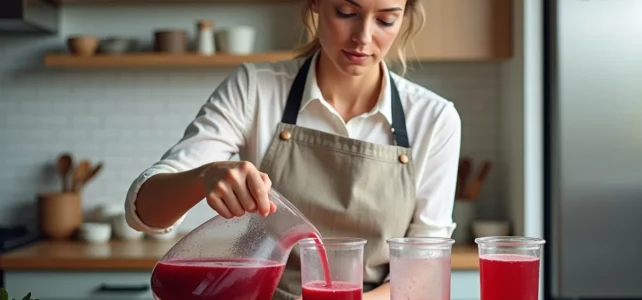
Freezing punch seems like a practical solution for preparing a party in advance or preserving a surplus. The real difficulty lies less in the freezing itself than in the behavior of the water-alcohol-juice mixture in a home freezer. Depending on the proportion of rum, citrus juice, and sugar, the result can vary from a solid block, a melting granita, to a lukewarm soup that never really set. Understanding these mechanisms allows for adapting the method to the type of punch being prepared.
Alcohol Content and Freezing Punch: What Really Happens in the Freezer
The behavior of a punch in the freezer directly depends on its alcohol content. A mixture containing less than 10% alcohol by volume freezes almost like water: it forms a hard block, with a real risk of breaking if the container is glass or too full.
Related reading : How to Read Your Payslip Effectively: Analysis and Practical Tips
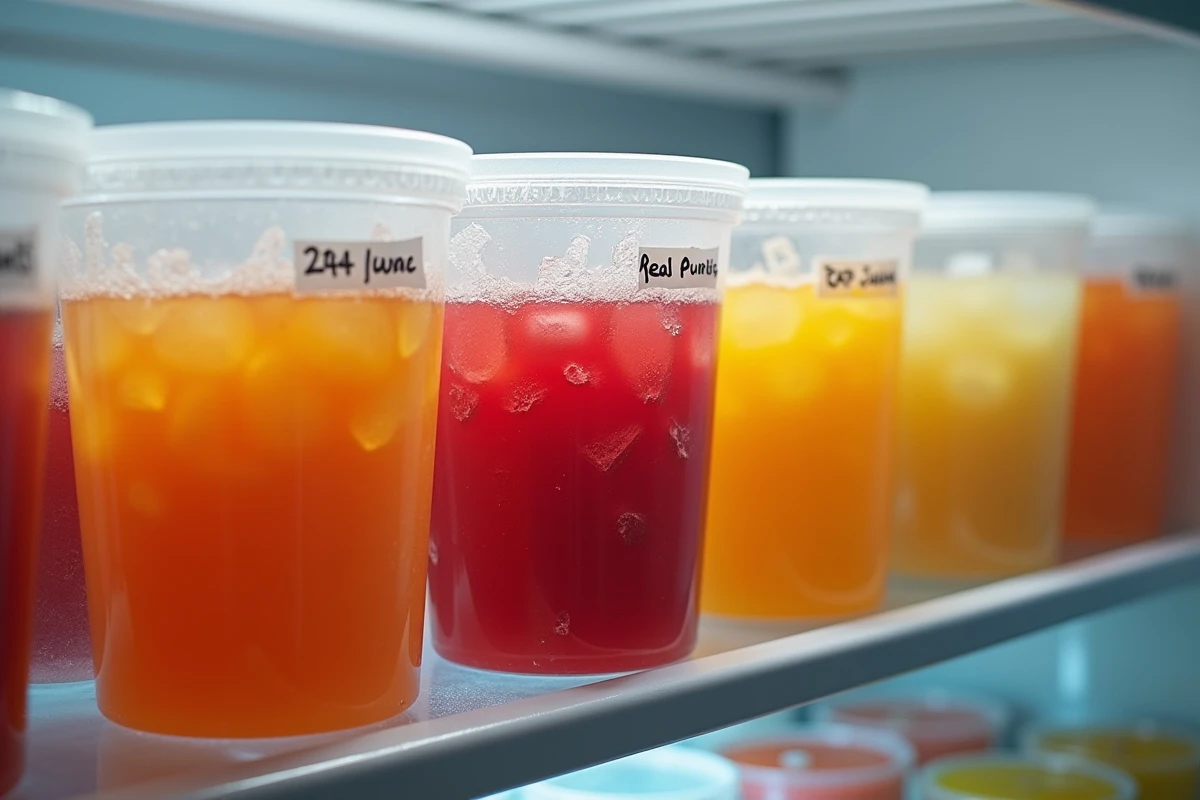
Beyond 15 to 18% alcohol by volume, freezing becomes partial in a standard home freezer. The punch never fully hardens: you get a slushy or granita-like texture, not a compact block. A punch heavily dosed with rum (such as a Caribbean planter) will therefore remain semi-liquid, which alters storage precautions and reheating time.
Recommended read : The new name of Zakmav and Kanrak finally revealed: everything you need to know
This distinction conditions everything else. A light punch (majority juice, little rum) freezes and thaws like a sorbet. A punch rich in spirits will only freeze partially, which better preserves the flavors but complicates long-term storage.
Before choosing a container or a thawing method, you need to assess where your recipe falls on this scale. The guide for freezing punch according to La Table de Jeanne reminds of the precautions related to containers and the expansion of the liquid.
Frozen Citrus Punch: Why the Taste Changes After Thawing
Feedback from forums (Marmiton, Mariages.net) converges: a thawed punch “has lost all its flavor, as if water had been added.” This is not a subjective impression. Two distinct phenomena explain this alteration.
| Phenomenon | Cause | Consequence on the Punch |
|---|---|---|
| Phase Separation | Ice crystals push away sugars and acids during slow freezing | Heterogeneous texture, watery areas and overly concentrated areas |
| Oxidation of Citrus | Ascorbic acid (vitamin C) degrades when in contact with air trapped in the container | Loss of bright acidity, flat taste, increased bitterness from the zest |
| Loss of Volatile Compounds | Light aromas (esters from rum, essential oils from zests) evaporate upon thawing | Less expressive nose, impression of dilution |
Punches heavily flavored with citrus (orange, lime, grapefruit) are the most vulnerable. Phase separation degrades the texture even before the taste is affected. Punches made with tropical fruit juices (mango, guava, passion fruit) resist better, as their pectin content partially limits the formation of large crystals.
Limiting Flavor Loss
Quick freezing reduces the size of the crystals and thus the separation. Using shallow containers (wide ice cube trays, flat bags) speeds up the process compared to a filled bottle.
Freezing punch without fresh citrus and then adding them at serving time remains the most reliable method to preserve acidity and freshness. Frozen fruit pieces in the punch become mushy and release bland water upon thawing.
Containers and Thawing Method for Homemade Punch
The choice of container is not a cosmetic detail. A low-alcohol punch expands when freezing, just like water. A glass container filled three-quarters full can burst. Rigid food-grade plastic containers or wide-mouth jars (like plastic jam jars) can withstand this expansion, provided you leave at least two centimeters of free space under the lid.
- Ziplock freezer bags allow you to flatten the punch for quick freezing and compact storage. They are suitable for low-alcohol punches that form a block.
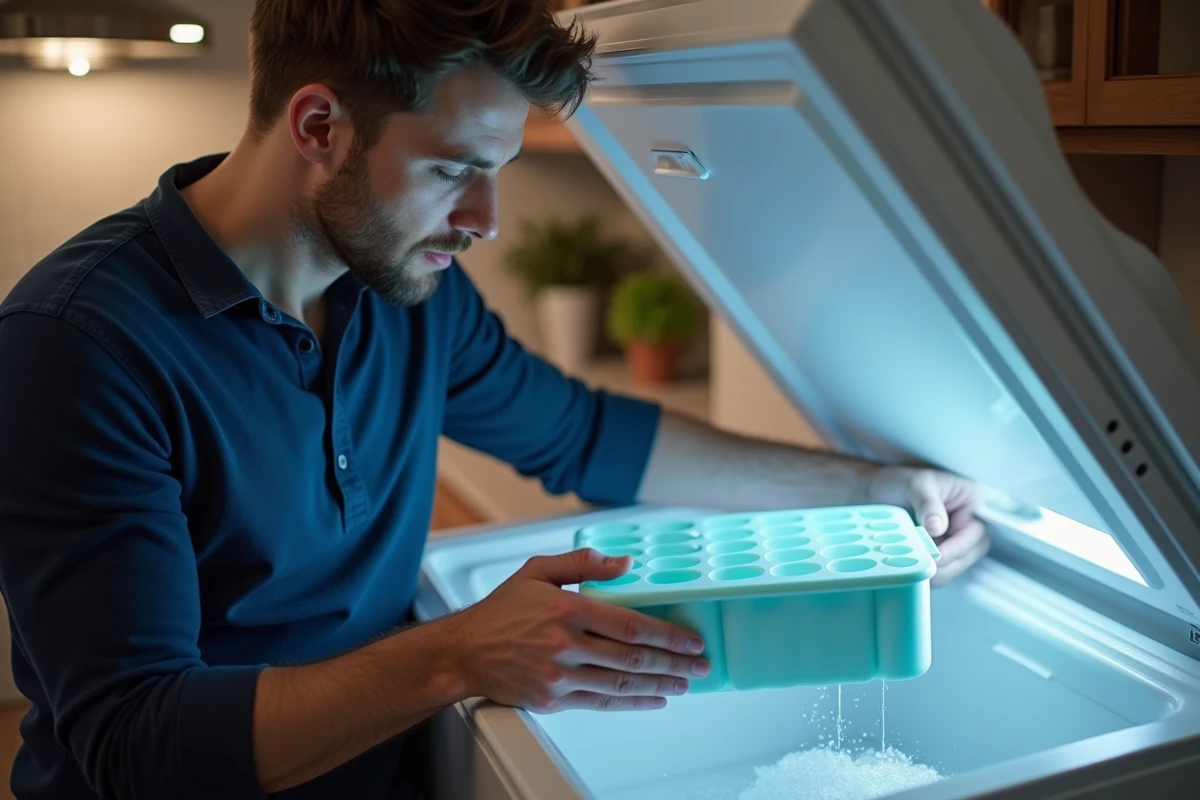
- Ice cube trays produce individual portions that are easy to measure. Convenient for a punch served as granita or to adjust the quantity without thawing everything.
- Plastic bottles work if they are filled only two-thirds full. Glass bottles should be systematically avoided.
Thaw in the Refrigerator, Not at Room Temperature
Slow thawing in the refrigerator (several hours, ideally overnight) better preserves the texture than thawing at room temperature. Quick thawing accentuates the separation between water, alcohol, and sugar. Punch thawed in the refrigerator requires a good mix before serving to re-homogenize the components.
For punches made with carbonated drinks (lemonade, sparkling water), the rule is simple: do not freeze the carbonated part. Any fizziness disappears upon freezing. Prepare and freeze the base (rum, juice, sugar), then add the soda at serving time.
Storage Duration and Limits of Freezing Punch
A properly packaged punch can be stored in the freezer for a few weeks without major degradation. Beyond a month, the flavors gradually fade, even in an airtight container. The rum does not degrade, but the fruit juices and sugar undergo slow alteration.
Refrigeration remains an often underestimated alternative. A homemade punch without fresh fruits can be kept for several days in the refrigerator, and a well-rum-dosed planter lasts even longer due to the alcohol acting as a natural preservative.
- Low-alcohol punch (less than 10% alcohol by volume): freezing possible in block, slow thawing, consume within three weeks.
- Medium-alcohol punch (10 to 15% alcohol by volume): partial freezing, granita texture, good aromatic retention for two to three weeks.
- High-alcohol punch (more than 18% alcohol by volume): does not really freeze, refrigeration more suitable than freezing.
Freezing punch works, but it does not suit all recipes in the same way. The alcohol content determines the final texture, fresh citrus does not freeze well, and the container conditions the safety of the process. Adapting the method to your recipe rather than applying a one-size-fits-all rule: this is the only approach that truly preserves the taste of the punch once thawed.