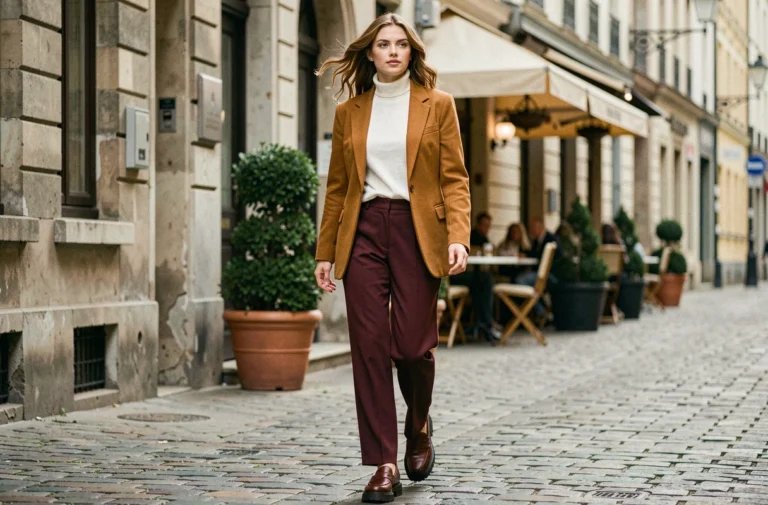
Mode Sign structures its editorial content around vertical sections covering ready-to-wear, accessories, beauty, and lifestyle. Each section targets a specific search segment, facilitating internal linking and capturing long-tail queries related to fashion trends.
Editorial architecture of Mode Sign: taxonomy and navigation logic
The site is based on a two-level hierarchy. The first level groups major categories (clothing, accessories, beauty, lifestyle). The second level breaks down each category into thematic or seasonal sub-sections.
This organization is not decorative. It conditions how indexing engines understand the hierarchy of pages and redistribute internal authority. A well-segmented main menu improves crawl budget by reducing click depth.
We observe that fashion sites that mix product categories and editorial categories at the same navigation level lose readability for bots. Mode Sign clearly separates transactional content from informational content, reinforcing the topical relevance of each section. By consulting the Mode Sign site overview, one can visualize this clear separation between the different branches of the site.

Fashion trend sections: what each section actually covers
Ready-to-wear and seasonal style
The ready-to-wear section articulates its publications around seasonal collections. The articles do not merely present pieces: they intersect criteria of cut, material, and context of use (office, evening, weekend).
Each article targets a distinct search intent, whether it’s a comparison of pant cuts or a guide on autumn layering. This editorial segmentation prevents cannibalization between closely related pages.
Accessories and leather goods
The accessories content treats bags, jewelry, belts, and glasses as autonomous categories. Mode Sign’s editorial choice is to produce advice sheets focused on morphology and occasion rather than simple lookbooks.
This positioning captures queries with strong informational intent (“what bag for an A silhouette,” “gold or silver jewelry according to skin tone”) that generate qualified traffic.
Beauty and care
The beauty section covers makeup, skincare, and hair routines. The articles rely on detailed routines rather than isolated product reviews, which extends session duration.
Lifestyle and decoration
Lifestyle expands the semantic field of the site beyond clothing fashion. By covering interior decoration, travel, and wellness, Mode Sign builds a broader thematic cocoon that supports the entire domain on related queries.
Internal linking and user journey on a fashion site
An effective fashion editorial site does not simply publish articles organized into categories. The linking between sections transforms a collection of pages into a coherent network.
Mode Sign connects its content in several ways:
- Contextual links within the body of articles point to complementary pages (an article on trench coats links to a belt guide, for example)
- “Similar articles” blocks at the bottom of the page extend the session by offering content from the same sub-section
- Category pillar pages aggregate the most performing articles and serve as hubs for redistributing internal PageRank
A well-thought-out linking strategy reduces the bounce rate and increases the number of pages viewed per session. On a fashion site, where images play a central role, the challenge is to integrate links without breaking the visual flow.

Impact of visual format on the indexing of fashion pages
Fashion sites heavily load high-resolution images. Without optimization, these visuals slow down loading times and penalize Core Web Vitals.
We recommend systematically checking three points on this type of site:
- The format of images (WebP or AVIF rather than uncompressed JPEG) to reduce page weight without sacrificing perceived quality
- The presence of descriptive alt attributes on each visual, which feed Google Images and enhance thematic relevance
- Native lazy loading on images located below the fold, to preserve the Largest Contentful Paint
A fashion site that neglects image optimization loses organic visibility despite high-quality editorial content. The user experience on mobile, where most fashion traffic concentrates, directly depends on these technical parameters.
Fashion content strategy in light of search evolution
The deployment of AI previews by Google changes the game for editorial sites. An Ahrefs study covering several hundred French domains found a notable drop in click-through rates for sites whose queries frequently triggered an AI preview. Purely informational content is the most exposed to no-click answers.
For a fashion site like Mode Sign, the solution lies in high-value content that AI cannot summarize in three lines: detailed visual guides, cut comparisons with photos, step-by-step beauty tutorials. Transactional queries and visual searches remain less affected by this phenomenon.
The challenge also lies in diversifying traffic sources. A site that relies exclusively on Google is more exposed than a site that captures traffic via Pinterest, newsletters, or social media. Diversifying acquisition channels protects against algorithmic volatility.
Mode Sign, by structuring its sections around specific topics and producing visual content that is difficult to substitute with automated summaries, adopts an editorial stance that better withstands these transformations. The thematic depth of each section remains the best defense against organic traffic erosion.