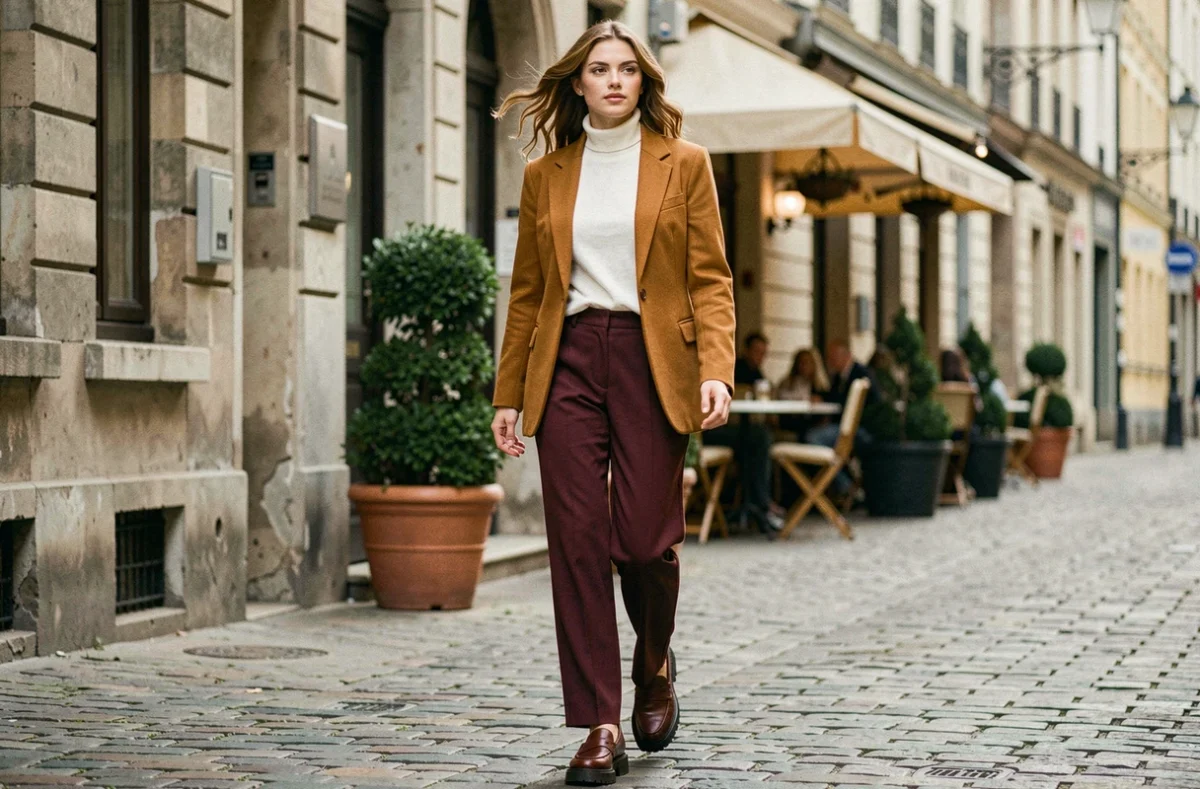
The autumn-winter 2026 fashion is not just a list of pieces to buy. Behind the silhouettes spotted on the runways of Paris and Milan, a deeper change is reshaping how a garment is designed, sold, and maintained. The European regulation on eco-design, the circularity strategies of luxury brands, and the evolution of dominant colors form a set that this season’s fashion trends translate concretely into the wardrobe.
Digital product passport and textile traceability: what changes for style
Competitors detail the cuts and colors. Few address the regulatory framework that will alter the relationship with the clothes purchased this season. The European regulation on the eco-design of sustainable products provides for a digital product passport for textiles. Through a QR code or a chip embedded in the garment, this device will provide access to the composition, origin, reparability, and recycling methods.
For those looking to explore fashion on Klottra, this evolution transforms the very notion of fashion boldness: choosing a piece is no longer solely based on its appearance, but also on its manufacturing transparency.
The destruction of unsold items is becoming a major regulatory issue, according to an analysis published by Elisa Industriq in September 2026. Luxury brands, long criticized for this practice, are now integrating reuse and closed-loop recycling circuits. Bold style this season also involves the ability to identify pieces designed to last.
| Criteria | Traditional Fashion | Circular Fashion 2026 |
|---|---|---|
| Traceability | Classic textile label | Digital passport (QR code or NFC chip) |
| End of life of the garment | Landfill or incineration | Repair, resale, closed-loop recycling |
| Unsold items | Frequent destruction | Anti-destruction regulation in progress |
| Consumer information | Composition and country of origin | Composition, origin, reparability, recyclability |

Colors and silhouettes autumn-winter 2026: the gaps between runways and real wardrobes
The real wardrobe absorbs the bright colors from the runways with a delay. The shades that transition from the runway to the street are often muted or worn as a single touch on an accessory. This season’s boldness lies in embracing a strong colored piece rather than multiplying prints.
Long flowy dress and wide pants: two dominant silhouettes
The long flowy dress, inspired by the poetcore movement, remains the most visible silhouette from the extended spring-summer collections into autumn. Its loose cut does not structure the waist, distinguishing it from the fitted dresses of previous seasons.
The structured wide pants, with a defined waist and ample fall, occupy the other side of the wardrobe. These two pieces share a common point: they prioritize comfort of movement without sacrificing shape. The choice between dress and pants depends less on the trend than on body shape and context.
Repair and second-hand: the substitution effect on the wardrobe
An analysis published by TexFash in September 2026 observes that repair replaces a new purchase more often than resale between individuals. This finding, documented in the UK market, does not automatically translate to all countries. It sheds light on a fundamental trend: extending the lifespan of a piece changes how a wardrobe is built.
Specifically, investing in a quality flowy dress or well-cut wide pants makes more sense when repair is part of the equation. Garment maintenance becomes a style topic in its own right, as highlighted by recent work from WRAP and the Ellen MacArthur Foundation.
- Check for reparability before purchase: accessible seams, replaceable buttons, fabric compatible with mending.
- Favor materials that withstand multiple wash cycles without losing their shape, a rarely displayed but crucial criterion for the longevity of the silhouette.
- Consider the cost per wear rather than the purchase price: a piece worn regularly over three seasons costs less than a trendy garment worn twice.
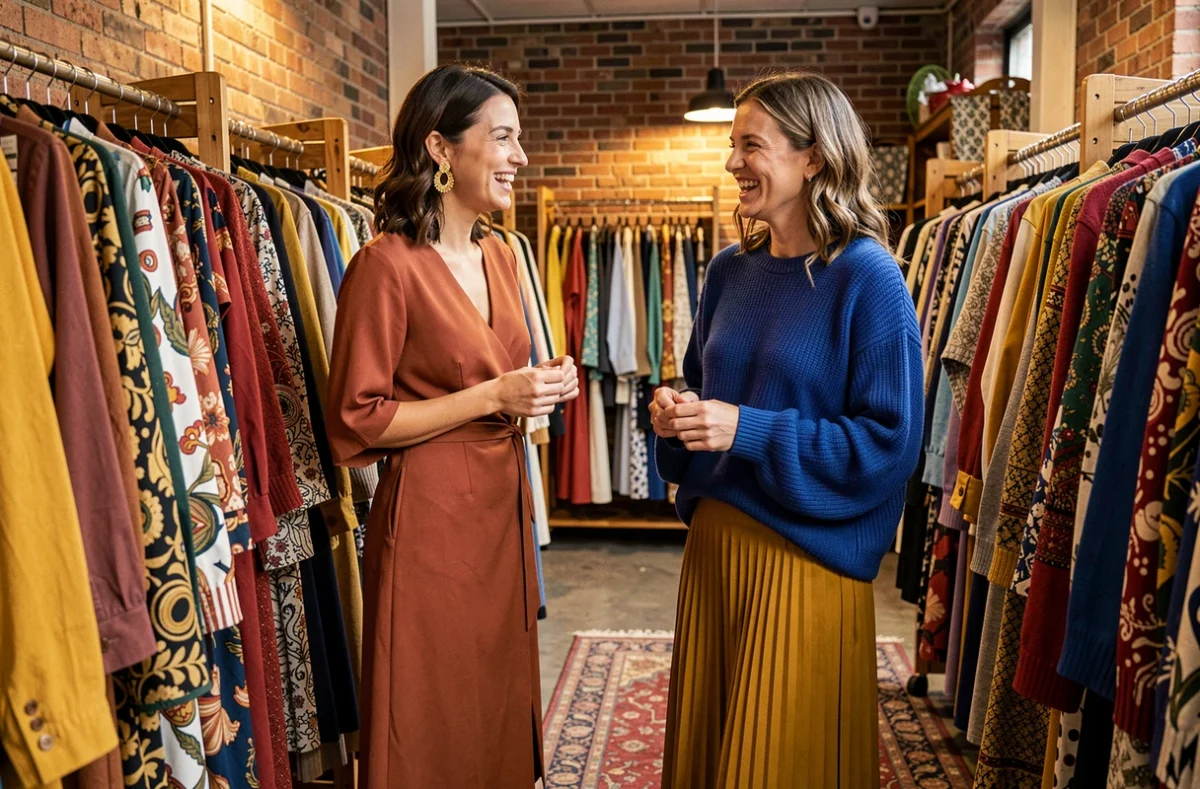
Bold looks this season: what the runways don’t show
The autumn-winter 2026 shows have multiplied layering (stacked vests, expressive brooches, socks worn with strappy sandals). These combinations work in a staged context. Transposed to everyday life, they require adaptation.
Layering and expressive accessories: three selection criteria
The coordinated outfit, visible in several houses, offers immediate visual impact with minimal styling effort. A tone-on-tone ensemble remains more wearable than a layering of contrasting textures.
The brooch and expressive accessory return as markers of identity. Their interest lies in their ability to transform a neutral outfit without altering the basic wardrobe. A single strong piece is enough: accumulating bold details dilutes the effect.
- A short blazer worn over a simple top creates a clean line, suitable for both the office and evening.
- The bomber paired with a midi skirt reflects a very present masculine-feminine contrast this season.
- Intense colors (red, pink, olive green) gain impact when worn in shades rather than as isolated blocks.
The autumn-winter 2026 fashion is characterized by a dual movement. The visible trends, saturated colors, and loose silhouettes coexist with structural transformations, digital passport, end of unsold destruction, and the rise of repair. This season’s fashion boldness is measured as much by the choice of cut as by the knowledge of what lies behind the label.