
A child stacking blocks, another repeating a word heard at the table, a third categorically refusing to put on their shoes. Each of these everyday situations is a moment of learning. A child’s awakening and education do not only take place at school or daycare: they are built through ordinary interactions at home, starting from the first months.
Oral language: how to encourage the first words in daily life
You may have noticed that a toddler understands many more words than they actually say? This phase, called passive language, precedes the production of words by several months. It is nourished by everything the child hears around them.
To enrich this stock of words, a simple habit works: describe out loud what you are doing with your child. During bath time, name the body parts. While preparing a meal, comment on the colors and textures. This is not a vocabulary lesson; it is a one-way conversation that will gradually become an exchange.
Reading aloud, even very briefly, remains the most documented lever for developing language. The guide “Les Clés de l’enfance 3-6 ans” published by the High Commissioner for Children in September 2026 emphasizes this point: reading or telling a story every evening enriches vocabulary, awakens imagination, and builds a taste for words.
No need for a new book every week. Children love repetition, and it is precisely this repetition that anchors learning.
If your child is slow to speak or if you observe persistent pronunciation difficulties after the age of three, an appointment with a speech therapist can provide an assessment. This professional evaluates language development and suggests, if necessary, appropriate exercises. The resources offered by Enfant 1 can also guide parents looking for concrete benchmarks on developmental milestones.
Child’s self-confidence: what happens before the age of six
Self-confidence is not decreed. It is built through repeated experiences where the child realizes they are capable of doing something by themselves.
In practical terms, this means accepting that they take longer to dress themselves, that they spill water while serving themselves, that they make mistakes. Independence develops when the adult resists the urge to do things for the child. This is not laxity; it is an educational choice that requires patience.
Encouraging effort rather than results also changes the game. Saying “you searched well for how to assemble this puzzle” is more empowering than “you are smart.” The first formulation values a process. The second labels the child in a way that they may fear they do not deserve next time.
Three concrete situations to strengthen confidence
- At mealtime, offer the child a choice between two dishes. This small decision-making power shows them that their opinion matters, without turning dinner into a constant negotiation.
- In the face of a conflict with another child, resist the urge to solve the problem immediately. Asking the question “what could you say to them?” helps the child seek a solution on their own.
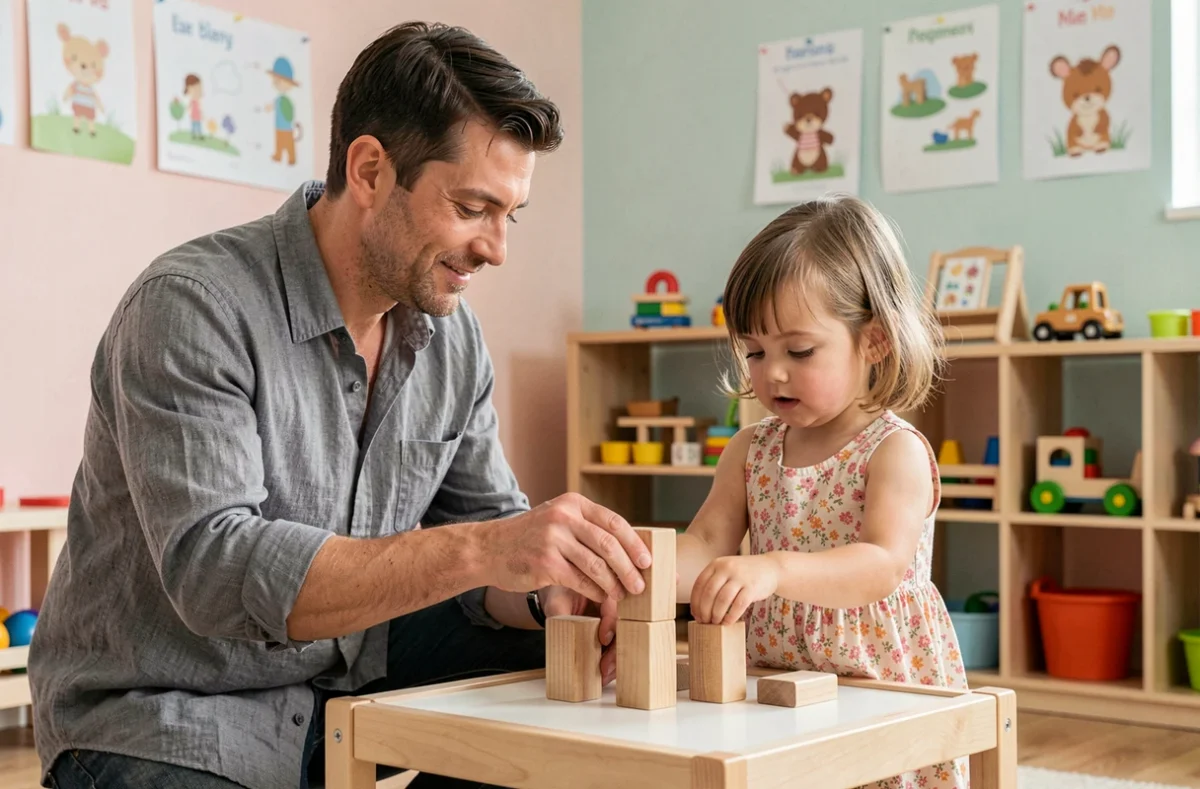
- After a failure (a tower of blocks that collapses, a failed drawing), name the emotion felt before suggesting to try again. “You are frustrated, that’s normal.” This emotional validation precedes the resumption of the activity.
Collective care and awakening: what parents can demand in 2025
The regulatory framework around the care of young children has recently changed, and these changes give parents new concrete levers.
Since January 1, 2025, municipalities or intermunicipalities have become the organizing authorities for public early childhood services. Their role is no longer limited to financing places: they must assess the needs of families, inform about the available offer, and plan its development. If you are struggling to find childcare, your town hall is now required to guide you.
The National Reference Framework for the Quality of Young Child Care, published on July 2, 2025, sets a common framework for all structures (nurseries, micro-nurseries, childminders, home care). It revolves around three axes: the relationship with the child, cooperation with parents, and the working conditions of professionals.
Why does this reference framework change anything for you? Because it gives you vocabulary and criteria to question a care structure about its practices. You can ask how the team organizes transition times, how they manage separation moments, or how they involve parents in the educational project.
Mandatory evaluation of nurseries: a benchmark for parents
Since January 1, 2025, a quality evaluation is scheduled every five years for young child care establishments. Decree No. 2025-304 of April 1, 2025, added a section on quality evaluation and corrective actions to the establishment project. Requesting the results of this evaluation is a right, not an excessive demand.
Listening and emotions: supporting without overprotecting
Listening to a child’s emotions is part of their education, but it does not mean accepting everything. The nuance can be summed up in one sentence: we welcome the emotion, we frame the behavior.
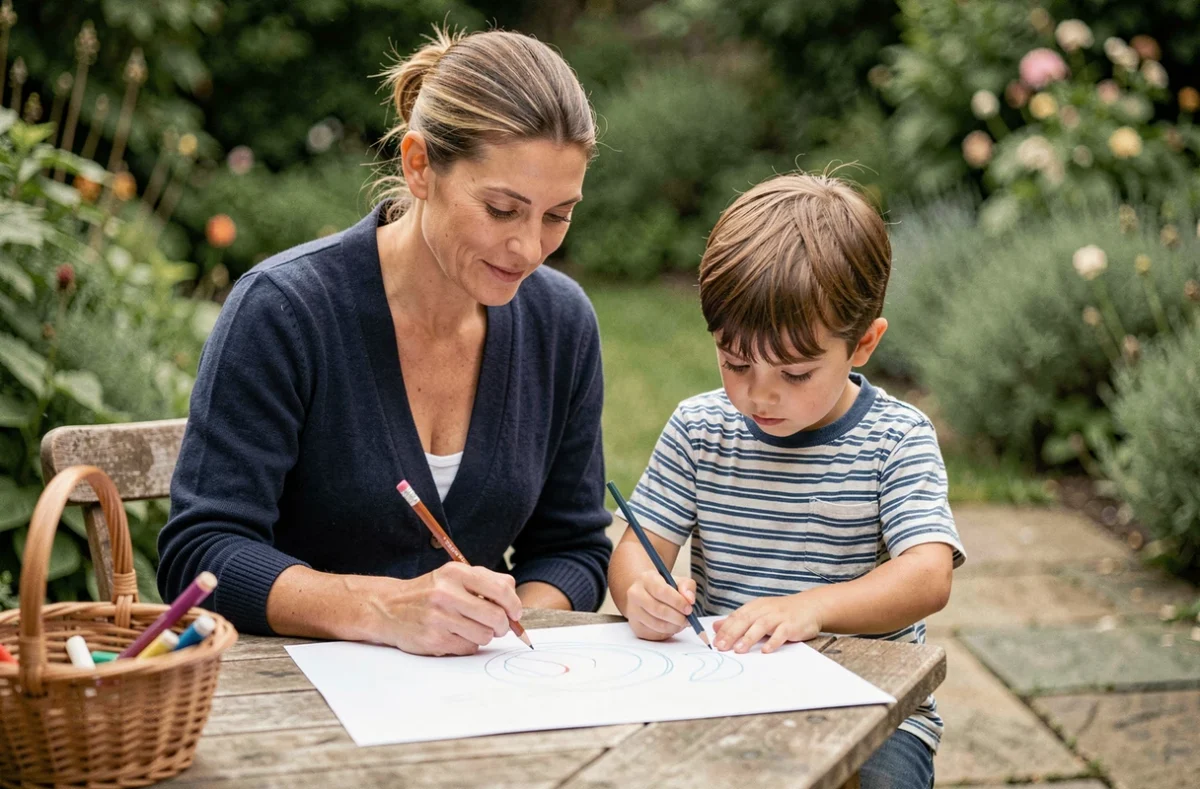
A child who hits because they are angry has the right to be angry. They do not have the right to hit. Clearly setting this limit, without shouting, is more effective than any punishment. Naming the emotion helps the child recognize it and, gradually, regulate it on their own.
Positive discipline, based on dialogue and solution-seeking, yields better long-term results than shouting or physical punishment.
Supporting a child’s awakening ultimately means accepting that each day brings its share of small progress and apparent regressions. A child who spoke well may stutter for a few weeks. A child who was toilet trained may have accidents. These variations are part of normal development. The parent’s role is not to smooth the trajectory but to provide a stable framework in which the child feels free to explore, fail, and try again.