
A cat scratching its ear non-stop for three days, a dog refusing its evening meal, a ferret remaining huddled in the back of its cage: we often notice a health issue in pets only after it has already set in. Taking care of your pets on a daily basis means first learning to detect these subtle signals before they turn into veterinary emergencies.
Animal Identification: The Most Underestimated Preventive Measure
Identification is rarely thought of when discussing daily care. Yet it is the first safety net in case of escape or loss. An identified animal is much more likely to find its way home than one without a microchip or tattoo.
For dogs, a microchip is mandatory. For cats, it is also required for any animal given away (sold or gifted). In practice, many indoor cat owners consider the microchip unnecessary. A cat that escapes through an open window without identification has very little chance of returning home. You can find useful resources on Passion Animaux to understand these procedures based on the species involved.
Also, make sure your contact information is up to date in the I-CAD file. A move or an unreported change of phone number renders the microchip useless.
Species- and Age-Appropriate Diet: What Changes Practically
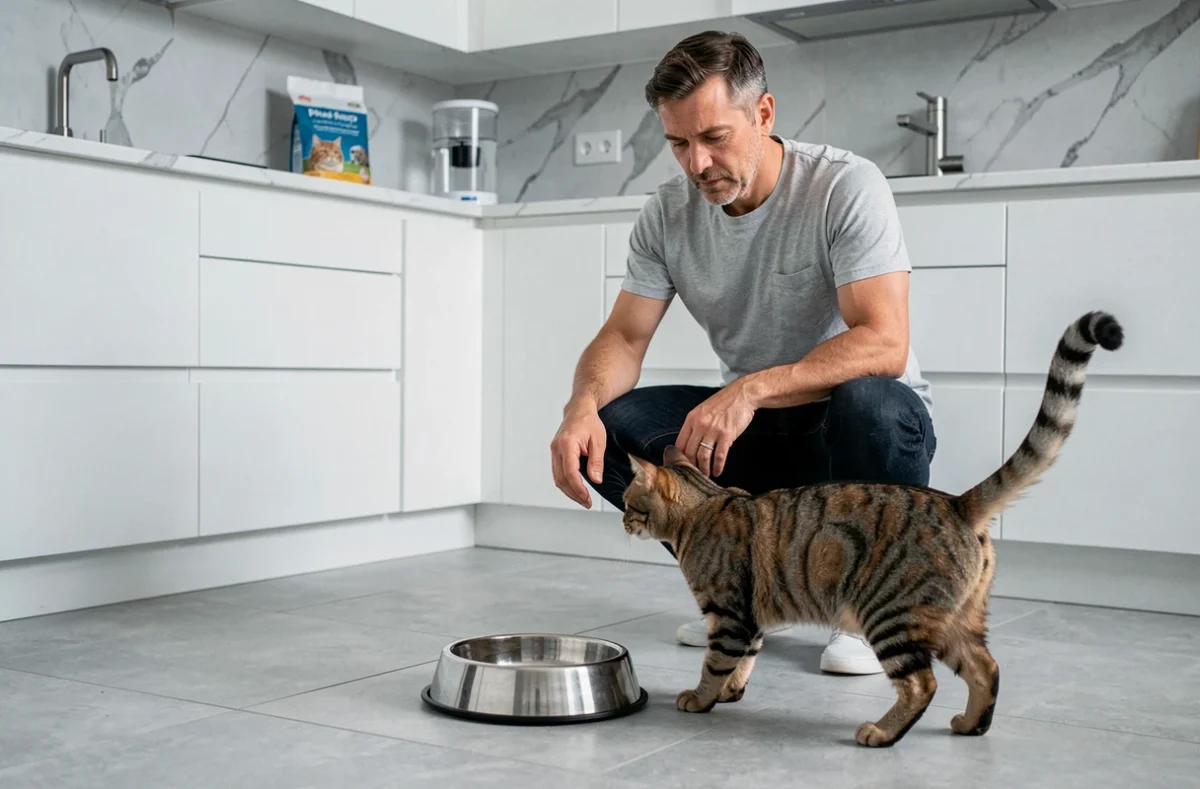
Feeding is not enough. The diet must be tailored to the species, age, and health status of the animal. A growing kitten has different protein needs than an eight-year-old neutered cat. A large breed dog requires a different energy density than a small breed.
Common Mistakes with Dogs and Cats
Free feeding remains one of the primary causes of obesity in indoor cats. For a neutered cat, switching to a portioned diet (two to three meals a day, measured amounts) significantly alters the weight curve within a few weeks.
For dogs, table scraps pose a real problem. Onion, garlic, chocolate, and grapes are toxic. It’s not a matter of quantity: even a small dose can cause poisoning in a small breed.
Small Pets: Specific Needs Often Ignored
The SPA reported a significant increase in the number of new pets (NAC) taken in during the summer of 2026 compared to the previous summer. Rabbits, ferrets, reptiles, rodents: these animals require a very specific diet that pet stores do not always detail correctly.
- A rabbit needs unlimited hay as the base of its diet, not industrial pellets.
- A bearded dragon requires live insects supplemented with fresh vegetables, along with regular calcium intake to prevent bone deficiencies.
- A ferret is a strict carnivore: high-quality cat kibble is better suited than most foods labeled “for ferrets.”
Reviews vary on the quality of food available in supermarkets for these species, but one rule stands: check the composition before buying, not just the brand.
Veterinary Follow-Up and Neutering: Two Levers Against Abandonment
The SPA-Affinity Foundation study presented in September 2026 confirmed the saturation of shelters in France. Shelters lack space to accommodate the influx of abandoned animals.
Neutering directly reduces the number of unwanted litters that contribute to this saturation. For a cat, neutering also limits escapes, fights among males, and urine marking. For a dog, it decreases the risk of mammary tumors in females when performed before the first heat.
Regular veterinary follow-up is not limited to annual vaccinations. A health check can detect silent pathologies:
- Kidney failure in older cats, often asymptomatic until an advanced stage.
- Hip dysplasia in large dog breeds, detectable by X-ray from a young age.
- Dental malocclusion in rabbits, a source of chronic pain if not corrected.
Treating parasites (fleas, ticks, worms) remains a basic action that should not be overlooked. Regular anti-parasitic treatment costs much less than treating piroplasmosis or a heartworm infestation.

Daily Stimulation and Well-Being: Adapting the Environment to the Animal
A dog that destroys the sofa in your absence is not “bad.” It is bored or suffering from separation anxiety. Mental and physical stimulation is an integral part of daily care.
For a dog, two walks a day are a minimum. Outings should include time for free sniffing, not just walking at heel. Sniffing is the most mentally exhausting activity for a dog, much more than running in a straight line.
For an indoor cat, environmental enrichment involves high points (cat trees, shelves), rotating toys to maintain novelty, and daily interactive play sessions. A cat that sleeps twenty hours a day without stimulation will eventually develop behavioral issues or become overweight.
Small pets have their own requirements. A rabbit needs a living space on the floor much larger than the standard cage sold in pet stores. A reptile depends on a precise thermal gradient in its terrarium, with controlled hot and cold zones.
Taking care of your pets ultimately means accepting that each species imposes its own constraints. Identification protects in case of loss, an appropriate diet prevents pathologies, neutering curbs the cycle of abandonment, and daily stimulation preserves mental balance. It is these concrete actions, repeated tirelessly, that make the difference between an animal that survives and one that thrives.