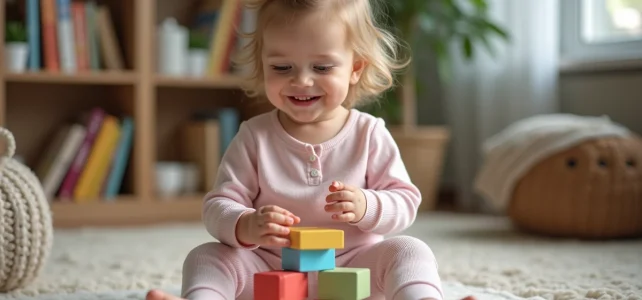
No growth curve evolves at the same speed from one child to another, even within the same sibling group. Some babies babble, sit up, or grasp objects well before the usual milestones are observed, while others seem to take a completely different pace.
Between 0 and 12 months, the differences in acquiring gestures and perceptions often astonish adults. However, early childhood specialists agree: the environment in which a child grows weighs as much as their genes. Each stage, whether motor or emotional, is built in the interaction between the child and what their surroundings offer.
Read also : Inspiring Stories and Everyday Tips to Improve Your Life
The major milestones of baby development from 0 to 12 months: what to expect?
As the first months go by, every movement, every smile, every glance from your baby reveals the richness of their development. From birth, the little one expresses themselves first through reflexes: they suck, grasp, and move without apparent logic. But very quickly, their sensory awakening becomes clearer. They recognize familiar voices, follow objects with their gaze, and calm down at the touch of a hand or in the presence of soft light.
Around three months, dexterity progresses: your baby tries to grab what is around them, discovers their fingers, and observes their hands for a long time. Gross motor skills and fine motor skills advance together. Between four and six months, lying on their stomach, they lift their head, sometimes roll to the side, while enjoying their new laughter and discoveries.
Further reading : How to Write a Touching Speech for Your Son's Wedding: Tips and Examples
At six months, sitting up becomes a small revolution. This new position opens up a world of possibilities. By nine months, some crawl, while others test their strength by pulling themselves up on furniture. Each stage of development follows a unique path: there’s no need to compare. Focus on observation, encouragement, and adapting the living environment.
To better understand your child’s rhythm, the Carnet de Bébé website for children provides detailed explanations of the main milestones during the first year. Relying on reliable benchmarks helps adjust your actions and respond finely to the needs of each little one.
What awakening activities to prioritize according to your child’s age?
The awakening of an infant involves encountering the world: textures, sounds, and lights invite them to explore from the very first days. As the weeks go by, offer awakening games suited to your child’s age to nurture their curiosity. A little one watches, listens, and touches. Place a music box nearby, hang a mobile with contrasting patterns. The first objects are important: soft rattles, play mats, fabric books with pages to manipulate. Favor a variety of materials, sounds, and simple colors.
From three or four months, grasping becomes more refined. Awakening activities then strengthen the coordination between eye and hand: soft cubes to grasp, textured balls, stacking rings. The repetition of these actions reassures the child, allows them to structure their days, and helps them tame the world. Around six months, motor adventure expands. Floor games, supervised rolls, secure mirrors: each experience prepares for the next step.
Here are some suggestions based on age to guide your choices:
- For a baby from 0 to 6 months: mobiles with distinct patterns, various sensory fabrics, small rattles that are easy to handle.
- From 6 to 12 months: shape boxes, soft balls, touch books, objects to fit together or stack.
The first year is built on the accumulation of experiences: new sounds, light games, sensations of softness or roughness. Awakening games designed for your baby encourage their thirst for learning, trying, and understanding. To support this energy, constantly offer new games, interact, talk, and share: it is the relationship, more than the object, that nurtures trust and development.

Small daily gestures to encourage and reassure baby in their discoveries
Supporting a child’s awakening is about simple gestures, attentive looks, and words that help them grow. With every smile, every outstretched hand, parents build a climate of trust and security for their little one. To support your child in their explorations, be attentive to their signals: a gaze seeking interaction, babbling, a hesitant gesture—all call for a response, a guiding hand.
Routines reassure babies. Bath, meals, naps: these repeated moments establish benchmarks. But every moment of daily life can become a source of learning. During dressing, name body parts; during diaper changes, talk about sensations, colors, and materials. Language accompanies every gesture, nurtures understanding, and strengthens the parent-child bond.
Here are some concrete attitudes to cultivate over the days:
- Encourage autonomy: let your baby try to bring an appropriate toy to their mouth or hold their spoon, even clumsily.
- Respect your child’s rhythm: some observe for a long time, others touch incessantly; each one progresses in their own way.
- Celebrate small successes: a simple word, a supportive smile, and your baby’s confidence grows.
Nothing replaces the attention of an adult who knows how to wait, observe, and accompany without rushing. Allowing the child to experiment at their own pace is to offer them the freedom to open up to the world without fear. In these ordinary, sometimes silent moments, the construction of autonomy and emotional balance takes place. Step by step, the child awakens, and a whole universe expands before your eyes.