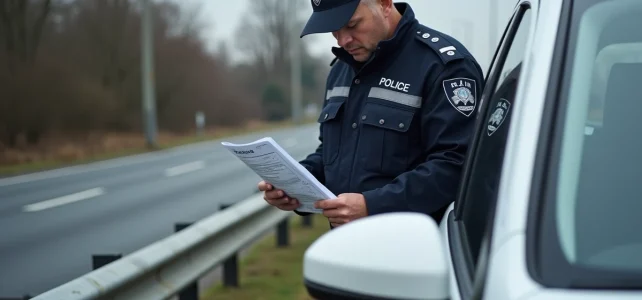
During a roadside check, law enforcement no longer just glances at the windshield to verify the technical inspection sticker. The digitization of data and the interconnection of national files have profoundly changed the way the police check the compliance of your vehicle. The technical inspection is now subject to an almost instantaneous digital verification, often even before the officer speaks to you.
National Technical Inspection File: the database consulted by the police
The verification hinges on the National Technical Inspection File (FNCT). This register centralizes all data related to technical inspections carried out on the territory. Using your license plate, an officer can access the date of the last inspection, its result, and the validity deadline within seconds.
You may also like : How to Write a Touching Speech for Your Son's Wedding: Tips and Examples
This system operates on the same principle as the Insured Vehicles File (FVA), used to verify that your car insurance is active. The two files are interconnected with the law enforcement’s ticketing systems. Road Safety confirms that this interconnection allows for automated checks during targeted or mass operations.
In practice, the officer no longer needs to ask you for the paper report of the technical inspection. Consulting the FNCT is sufficient to establish whether your vehicle is compliant. An article details how the police verify the technical inspection on MTM France and the various steps of this digital procedure.
Related reading : How to Choose the Ideal Location to Establish Your Business and Ensure Its Success
The sticker affixed to the windshield, long considered the visible proof of the technical inspection, thus loses its central role. It remains a quick visual indicator, but it is the digital data that holds weight in case of dispute.
Automatic License Plate Recognition and Technical Inspection Without Stopping the Vehicle
The automatic license plate recognition (LAPI) devices represent the most significant evolution in detecting vehicles in violation. Installed on unmarked police vehicles or fixed gantries, these sensors photograph each plate and compare it to databases in real-time.
A vehicle with an expired technical inspection can therefore be identified without any officer physically stopping it. The system generates an alert, and the ticketing is then carried out via electronic ticket (PVe). Activity reports from prefectures indicate an increase in these so-called “without systematic stop” checks.
What the LAPI Detects and What It Does Not
The LAPI cross-references the plate with the FNCT and the FVA. It identifies three situations: expired technical inspection, uninsured vehicle, or vehicle reported stolen. However, it cannot determine if a follow-up inspection was conducted within the required timeframe when the result of the inspection was unfavorable. This verification requires a more in-depth manual consultation of the file.
The driver ticketed by LAPI receives a notice of contravention by mail, without having been intercepted. This process surprises many motorists who discover the fine several weeks after passing in front of the device.
Sanctions for Lack of Technical Inspection During a Road Check
The absence of a valid technical inspection during a roadside check triggers a procedure that goes beyond a simple fine. Here’s what the regulations provide:
- A fixed fine, classified among the traffic code violations, is issued immediately or sent by PVe
- Immediate immobilization of the vehicle may be decided by the officer, meaning you cannot leave with your car until the situation is regularized
- Impoundment is possible if the vehicle poses a danger to road safety or if the driver cannot regularize their situation within a reasonable timeframe
- A deadline is generally granted to carry out the technical inspection and present the result to the authorities, failing which the fine is increased
The current operational doctrine gives law enforcement a margin of discretion. An inspection expired for a few days will not be treated the same way as a vehicle that has never been inspected. Field feedback varies on this point, with some officers systematically applying immobilization while others prefer to allow a regularization period.

Technical Inspection and Verified Documents: What the Officer Really Asks For
During a standard roadside check, the officer verifies three mandatory documents related to the vehicle and its driver:
- The driving license, valid for the category of the vehicle being driven
- The vehicle registration certificate (carte grise)
- The insurance certificate currently in force
The technical inspection report is not systematically requested in paper form, as consultation of the FNCT is gradually replacing the verification of the physical document. However, the officer may ask you to present it, and its absence in the vehicle is not in itself an offense if the inspection is valid in the file.
The Case of New Vehicles and Exemptions
New vehicles benefit from a grace period before the first technical inspection. During this period, no offense can be recorded in this regard. The officer verifies this via the date of first registration found in the databases. For classic cars or certain specific categories, the frequency of the technical inspection differs, which the FNCT takes into account.
The digitization of inspections has made fraud significantly more difficult. Falsifying a windshield sticker is no longer very useful when real data is accessible within seconds via the license plate. Attempts at document fraud regarding the technical inspection have mechanically lost effectiveness against this centralized system.