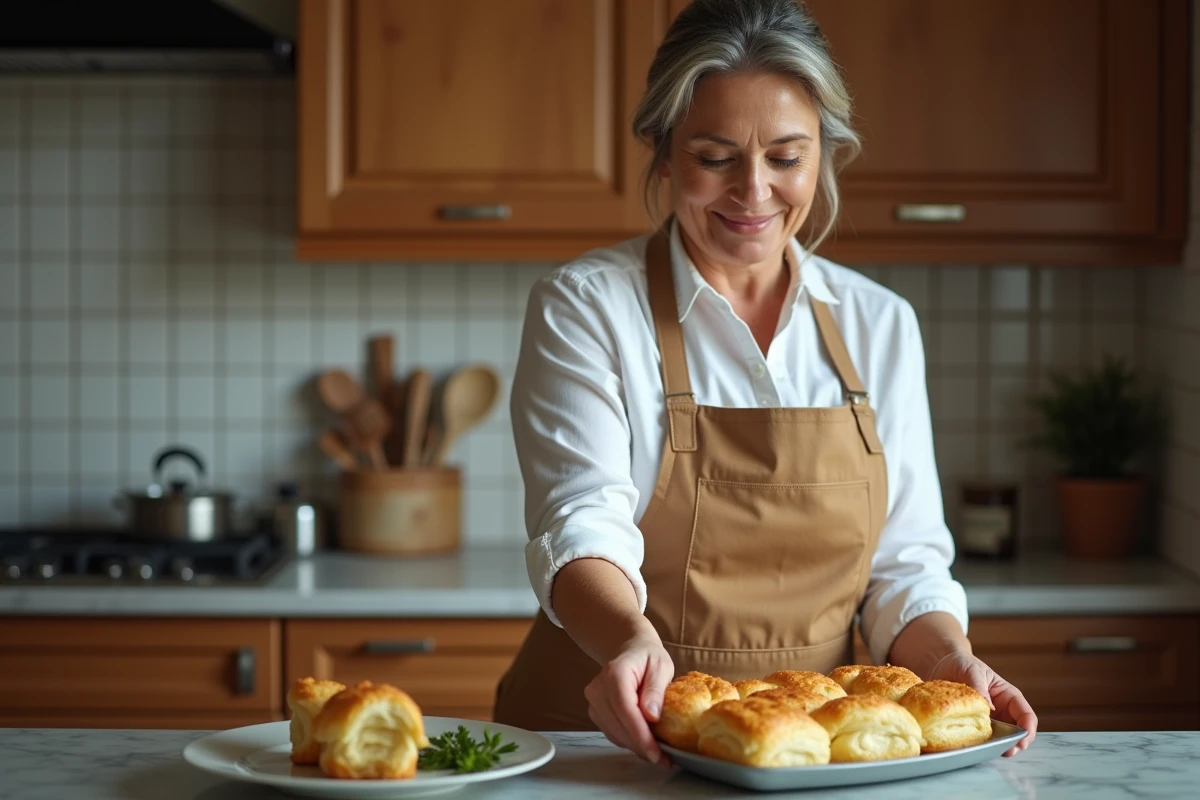
A sudden shift from cold to hot can irreparably alter the texture of certain preparations. Unlike many dishes, prolonged reheating at low temperatures does not always guarantee success. A simple addition of moisture is also not enough to preserve the creaminess of a creamy mixture surrounded by puff pastry. However, precise gestures and careful adjustments can help avoid drying out during reheating. Several methods, validated by chefs and restaurateurs, rely on a balance between gentle heat, moisture addition, and delicate handling.
Why the bouchée à la reine tends to dry out during reheating
The bouchée à la reine embodies one of the pillars of French cuisine. This dish plays on two fronts: it is essential to keep the puff pastry airy while maintaining a creamy and generous filling. But this dual requirement complicates the task. On one side, a crust with thin, almost fragile layers that fears both steam and overly direct heat. On the other, a filling that is rich, often made of white meat, mushrooms, creamy sauce or white wine sauce, sometimes enhanced with quenelles. Reheating poses two risks to the puff pastry: it can become heavy and soft, or conversely, dry out and lose all its appeal. A stint in the microwave causes the crust to collapse, while an oven that is too hot or insufficiently covered dries out the filling, making it bland and pasty. The natural moisture of the filling then escapes without mercy, especially if it is not protected. To prevent the bouchée à la reine from drying out, it is essential to choose techniques that respect the specificity of each element. The aluminum foil used in the oven protects the pastry by limiting evaporation while ensuring even heating. For the filling, a little broth or cream, reheated over very low heat or in a bain-marie, restores its velvety texture to the sauce. Another crucial reflex: assemble the crust and filling at the very last minute, just before serving. Heating the elements separately, preferring a moderate oven temperature, covering with a sheet of aluminum: these gestures, far from being trivial, demonstrate a fine knowledge of the products. Preserving the contrast between the pastry and the filling is the art of reheating the bouchée à la reine.
Which methods to prioritize to preserve tenderness and crispness
The success of a bouchée à la reine depends on choosing an appropriate reheating method. To achieve a contrast worthy of a restaurant table, it is necessary to separate the puff pastry and the filling during heating. The pastry enjoys gentle, dry heat, far from the microwave, which will surely soften it. Place it in a traditional oven at 160 to 180°C for ten to fifteen minutes on a baking sheet. Protect it with a sheet of aluminum foil: this prevents it from drying out while keeping moisture from accumulating under the crust. For the filling, the temperature increase should be gradual. The bain-marie works wonders: ten minutes are enough to achieve a well-bound, coating sauce. If time is short, a gentle heat in a saucepan works, as long as it never reaches boiling. If the preparation thickens too much, add a splash of broth or a drizzle of cream. The microwave can be a quick fix for the filling, at very low power, covered, but it is never the ideal solution. Always assemble just before serving. Place the golden crust on the plate, ladle over hot sauce: the magic of the bouchée à la reine lies in this immediate contrast between crisp and melting. This rigor in the gestures pays homage to the tradition of this great French classic.
Practical tips and tricks for always delicious bouchées
Mastering the bouchée à la reine also means knowing how to anticipate its storage and serving. A few simple habits can enhance this dish during festive meals or large family gatherings.
Here’s how to organize storage and assembly for guaranteed success:
- Prepare the filling in advance and store it in a well-sealed container in the fridge.
- Keep the puff pastry at room temperature, away from any moisture: it does not appreciate cold or being frozen.
- Assemble just before serving: the meeting of hot and crispy makes all the difference; do not let the dish wait.
- If you have too much filling, freeze it separately. The pastry cannot withstand freezing; it would lose its flakiness and quickly become disappointing.
To accompany the bouchée à la reine, several options highlight its richness. Pilaf rice, fresh pasta, glazed vegetables, or a green salad: each choice enhances the play of textures and flavors. The variations are numerous: a seafood version, a vegetarian version with mushrooms or chestnuts… The bouchée à la reine reinvents itself without losing what makes it successful.
Serve on a plate, piping hot, without delay. This dish, often entrusted to a caterer, can also shine at home, provided the meticulous assembly is respected at the last moment. This attention to detail guarantees contrast and indulgence, right down to the very last spoonful. Preparing the bouchée à la reine is to offer oneself a suspended moment between tradition and comfort, and that cannot be reheated in a hurry.